

New floors are one of the bigger home investments most people make, and unlike a sofa or a coat of paint, they’re hard and expensive to undo. Yet most homeowners spend more time comparing the flooring than the store selling it — even though the store often matters more to how the project turns out.
The product on the showroom floor is roughly the same everywhere. What separates a smooth installation from a six-week headache is the people behind it: their measuring, their advice, their installers, and what they do when something goes wrong. Here’s how to tell a great flooring store from a merely adequate one before you hand over a deposit.
Start by knowing what kind of buyer you are
Before you walk into any store, get honest about what you actually need help with. It shapes which store is right for you.
- You know exactly what you want and just need a good price and clean install. A high-volume store or even a big-box retailer might serve you fine.
- You have a rough idea but want guidance on durability, style, and what holds up in your home. You want a specialty store with knowledgeable staff.
- You’re starting from zero — unsure about material, budget, or what’s realistic. You want a full-service store that does in-home consultations and handles the project end to end.
There’s no wrong answer, but matching the store to your needs saves you from paying for hand-holding you don’t want, or going it alone when you needed a guide.
Specialty store vs. big-box retailer
Both can be legitimate choices. The trade-offs are predictable.
A big-box retailer typically wins on price and convenience for in-stock, popular products. The catch is thinner expertise on the sales floor, installation that’s usually subcontracted to crews you won’t meet until the day they arrive, and less accountability if the install goes sideways.
A local specialty flooring store usually offers deeper product knowledge, a wider range of materials and price points, installers they actually vet and stand behind, and a single point of contact who owns the outcome. You often pay a bit more, but the project tends to be smoother and the recourse better if there’s a problem.
For a simple job — say, vinyl plank in a spare bedroom — the difference may not matter. For hardwood across a main floor, stairs, or anything involving subfloor prep, the specialist’s expertise usually pays for itself.
What to look for in a quality flooring store
1. Real product selection — and the ability to explain it
A good store carries multiple categories (hardwood, engineered wood, luxury vinyl, laminate, tile, carpet) and several quality tiers within each. More important than the size of the showroom is whether the staff can explain why one product suits your situation better than another.
Ask a salesperson to compare two similar-looking products. A strong answer covers wear layer, construction, water resistance, warranty, and realistic lifespan — not just “this one’s nicer.” If they steer you straight to the most expensive option without asking how you live, that’s a flag.
2. Knowledgeable, low-pressure staff
The best salespeople ask questions before they show you anything: Who lives in the home? Pets? Kids? Which rooms? How long do you plan to stay? Sun exposure? Moisture concerns? Their recommendation should follow from your answers.
Pressure tactics — “this price is only good today,” reluctance to let you take samples home, pushing add-ons you didn’t ask about — are reasons to slow down. Good stores know flooring is a considered purchase and don’t rush you.
3. In-home measurement and consultation
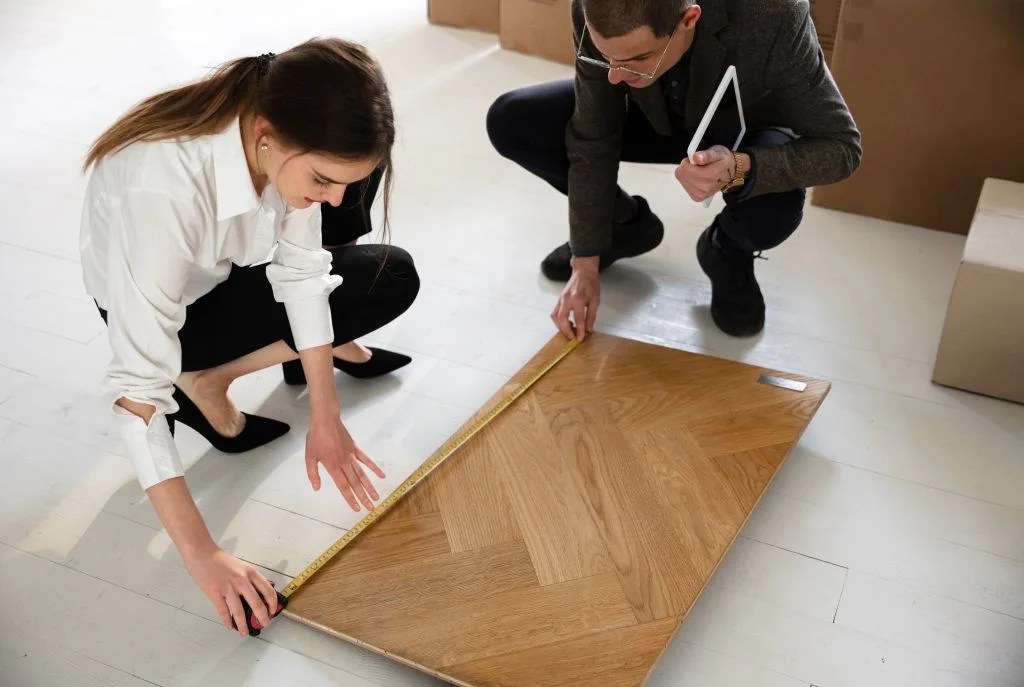
Accurate measurement is where projects are won or lost. A store that measures your space in person (rather than asking you to do it) catches the things that blow budgets later: uneven subfloors, transitions between rooms, stairs, closets, and how much material waste your layout requires.
If a quote is based only on numbers you provided over the phone, treat it as an estimate, not a price. The real number comes after someone sees the space.
4. Their own installers — or vetted ones they stand behind
This is the single most important factor and the one most buyers overlook. Installation quality matters more than the flooring itself. A premium floor installed badly looks and performs worse than a mid-range floor installed well.
Ask directly:
- Are installers employees or subcontractors?
- How long have the crews worked with the store?
- Are they licensed and insured?
- Who is responsible if installation causes a problem — the store or the crew?
You want a store that takes ownership of the install, not one that hands you off to a third party and disappears.
5. Clear, itemized quotes
A trustworthy quote breaks out materials, underlayment or padding, removal and disposal of old flooring, subfloor prep, installation labor, moving furniture, and any trim or transition pieces. Vague all-in numbers hide surprises.
Get quotes from at least two or three stores and compare line by line — not just the bottom number. The cheapest total sometimes leaves out prep or disposal that you’ll get billed for later, while a slightly higher quote may actually be more complete.
6. Warranties you understand
There are usually two warranties: the manufacturer’s warranty on the product and the store’s warranty on the installation. Ask what each covers, for how long, and what voids them. An installation warranty is a sign the store is confident in its crews. Get the terms in writing.
7. A real reputation you can verify
Look beyond the star rating to what reviews say. Patterns matter more than any single review:
- Do customers mention installation quality, not just friendly sales?
- How does the store respond to complaints — defensively, or by fixing things?
- Are there repeat or referral customers?
Check Google, the Better Business Bureau, and any local community groups. Ask the store for references from recent jobs similar to yours, and ask whether you can see a completed installation in person.
Questions to ask before you commit
Bring this list to the showroom:
- Do you measure in-home, and is it free?
- Are your installers employees or subcontractors, and are they insured?
- What does your quote include — and what’s not in it?
- What’s the realistic timeline from order to finished install?
- What happens if there’s a problem during or after installation?
- What are the product and installation warranties?
- How do you handle moving furniture and disposing of old flooring?
- Can I take samples home to see them in my own light?
- Do you offer financing, and what are the actual terms?
- Can you share references or photos from recent local jobs?
The answers — and how comfortable the staff is giving them — tell you a lot.
Red flags worth walking away from
- Pricing that’s vague or pressure to decide immediately
- No in-home measurement offered
- Won’t say whether installers are insured or who’s accountable for the install
- No written warranty on installation
- Reviews that repeatedly mention poor installation or unresolved complaints
- A quote that’s dramatically lower than others (something is usually missing)
- Reluctance to provide references
Don’t let price be the only number that matters
It’s tempting to choose the lowest quote, especially on a big project. But flooring is one of those purchases where the cheapest option frequently costs more over time — through gaps and lifting from a bad install, prep work that got skipped, or a product that wears out years early.
Weigh price against expertise, install quality, warranty, and reputation. A store that’s a little more expensive but measures carefully, uses its own seasoned crews, and stands behind its work is almost always the better value.
The bottom line
Choosing a flooring store comes down to a simple test: do they treat your project as a relationship or a transaction? The right store asks about how you live before it shows you product, measures your space in person, owns the installation rather than outsourcing the risk, quotes you honestly, and backs its work in writing.
Take your time, get a few detailed quotes, ask the hard questions, and trust the store that earns your confidence — not just the one with the lowest sticker. Floors you’ll walk on for the next twenty years are worth a few extra hours of homework.


Facebook
Twitter
Instagram
LinkedIn
RSS